
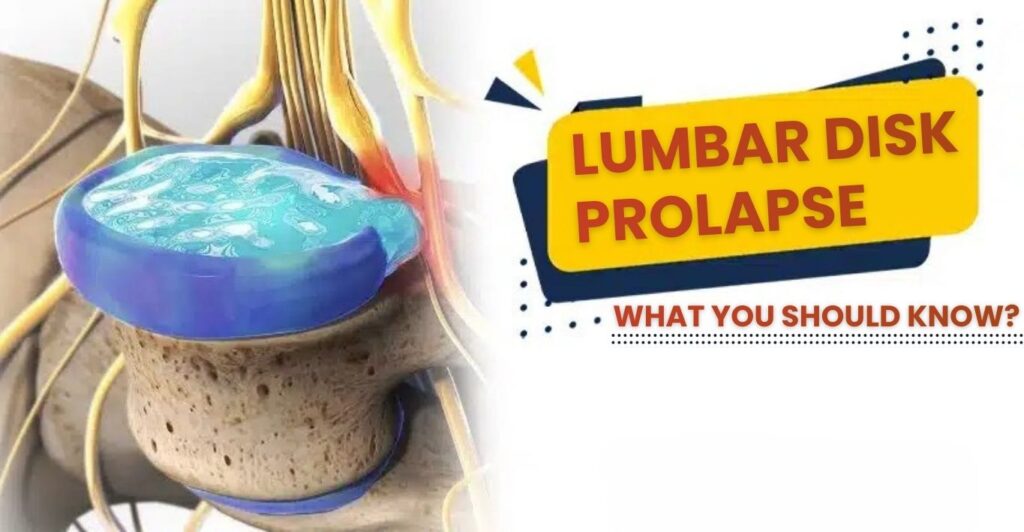
The spine (vertebral column) is made up of 33 vertebrae separated by soft discs that act as cushions and shock absorbers. These discs allow movement and support body weight, especially in the lower back (lumbar spine).
A lumbar disc prolapse—also called a herniated or slipped disc—occurs when the soft inner material of a disc pushes out through a tear in its outer layer. This most commonly happens in the lower back, especially between L4–L5 or L5–S1.
When a disc prolapses, it can press on nearby nerves, causing back pain, numbness, weakness, or tingling, often affecting the legs.
Causes:
Lumbar disc prolapse often develops due to:
- Age-related degeneration and wear and tear of discs
- Sudden injury or trauma, such as accidents or heavy lifting
- Repeated strain or improper posture
- Increased pressure on the spine, causing disc bulging or tearing
Although disc degeneration is common, it does not always lead to long-term problems if treated early.
Symptoms:
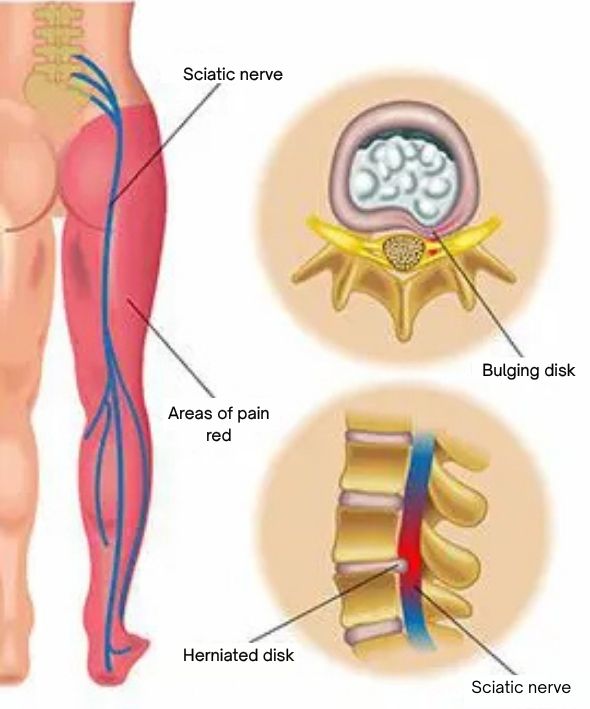
Symptoms vary depending on the affected disc and nerve, but may include:
- Persistent or intermittent lower back pain
- Reduced knee or ankle reflexes
- Muscle spasms in the back
- Sciatica (pain radiating down the leg)
- Weakness or numbness in the legs or feet
- Pain worsening with movement, coughing, or sneezing
- In severe cases, changes in bowel or bladder function
Since several conditions can mimic these symptoms, it is important to consult a doctor for proper diagnosis and timely treatment.
For more information, talk to a healthcare provider.
If you have any questions about WHAT IS LUMBAR DISC PROLAPSE? Please feel free to leave a comment.
Do share this blog with your friends and family!