
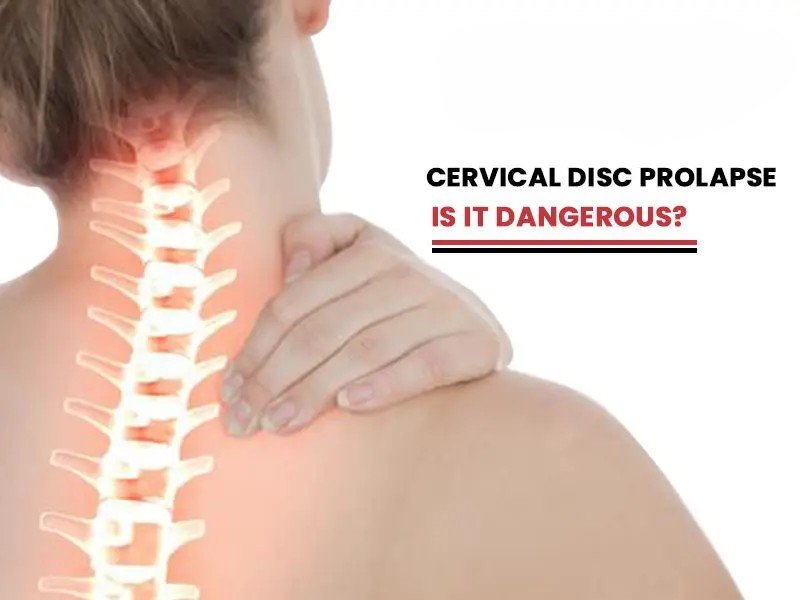
The cervical spine—made up of seven vertebrae (C1–C7)—supports your neck and protects the spinal cord, which carries signals from your brain to the rest of your body. Between these vertebrae are soft, gel-like discs that act as shock absorbers and allow smooth movement.
What Is Cervical Disc Prolapse?
Cervical disc prolapse, often called a slipped or herniated disc, occurs when the inner gel of a spinal disc pushes through a tear in its outer layer. This can put pressure on nearby nerves in the neck, leading to pain and other symptoms.
Is It Dangerous?
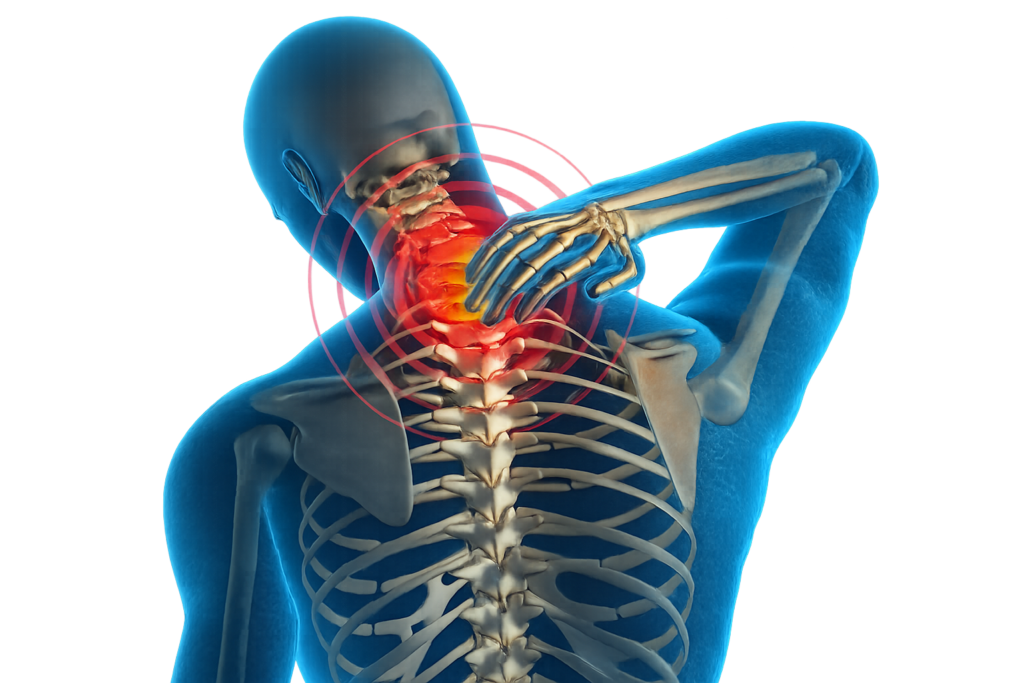
In most cases, cervical disc prolapse is not dangerous and improves with time and conservative treatment. However, in rare situations, it can lead to serious complications:
◼️Potential long-term nerve damage if untreated
◼️Loss of coordination or difficulty walking if the spinal cord is affected
◼️Persistent nerve compression causing numbness or weakness in the arms
Causes
◼️Age-related wear and tear: As you get older, spinal discs lose water content, becoming less flexible and more prone to tearing.
◼️Heavy lifting or sudden strain: Improper lifting techniques or sudden jerking movements can put excessive pressure on the cervical discs.
◼️Smoking and certain occupations: Smoking reduces blood flow to spinal tissues, while repetitive or physically demanding jobs can accelerate disc degeneration.
◼️Genetic predisposition: Some people may inherit a higher risk of developing disc problems due to family history.
◼️Injury or trauma: Accidents, falls, or direct impact to the neck can damage the discs and lead to herniation.
Treatment Options
Most people recover within a few weeks using non-surgical treatments such as:
◼️Rest, ice/heat therapy
◼️Physical therapy and exercises
◼️Steroid injections in select cases
◼️Medications for pain and inflammation
Surgery is considered only when symptoms persist or worsen. Procedures like discectomy, spinal fusion, or artificial disc replacement may be recommended depending on the severity.
For more information, talk to a healthcare provider.
If you have any questions about Cervical Disc Prolapse, Please feel free to leave a comment.
Do share this blog with your friends and family!